Cortisol, Menopause & Foot Pain: The Hidden Stress Connection Women 40+ Need to Know
If you’re in your 40s or 50s and noticing aching heels, sore arches, burning soles, or stiff feet first thing in the morning, you might be wondering:
“Why are my feet suddenly struggling when I haven’t changed much?”
Here’s a truth many women are never told:
👉 Your foot pain may be driven as much by stress hormones as by your shoes or workload.
Let’s gently unpack the connection between cortisol, menopause, and foot pain — and most importantly, what you can start doing today to support your body from the feet up.
What Is Cortisol — and Why Does It Matter in Menopause?
Cortisol is often called the stress hormone. It’s not “bad” — we need it to:
- Wake up in the morning
- Respond to challenges
- Regulate blood sugar and inflammation
But during perimenopause and menopause, the body’s hormonal orchestra changes.
As oestrogen and progesterone decline, cortisol becomes more dominant — and the nervous system often becomes more sensitive to stress.
That means:
- Stress hits harder
- Recovery takes longer
- Inflammation lingers
- Pain feels louder
And yes — your feet feel it too.
How Elevated Cortisol Contributes to Foot Pain
1. Cortisol Increases Inflammation in Fascia
Your feet are wrapped in a connective tissue web called fascia.
This tissue thrives on hydration, movement, and calm nervous system input.
Chronically high cortisol:
- Reduces tissue hydration
- Increases inflammatory chemicals
- Makes fascia stiffer and less resilient
This can show up as:
- Plantar heel pain
- Arch fatigue
- Tight calves and Achilles tension

Stress Keeps Your Nervous System in “High Alert”
When cortisol stays elevated, your nervous system lives in fight-or-flight.
In this state:
- Muscles don’t fully relax
- Pain signals amplify
- Healing slows
Your feet — packed with nerve endings and sensory receptors — become overprotective, holding tension instead of adapting.
This is why foot pain often feels worse:
- In the morning
- After long shifts
- During emotionally stressful periods
Poor Sleep = Poor Tissue Repair
Menopausal women often struggle with:
- Night waking
- Early morning anxiety
- Restless sleep
High cortisol at night blocks deep repair.
Your feet — which carry you all day — rely on overnight recovery to rebuild tissue strength.
Without it, pain accumulates rather than resolves.
Why “Just Stretching” Isn’t Enough Anymore
Many women tell me:
“I stretch my calves, roll my feet, buy supportive shoes — but the pain keeps coming back.”
That’s because foot pain in menopause is not just mechanical.
It’s:
- Hormonal
- Neurological
- Emotional
- Lifestyle-based
If cortisol remains high, the body resists lasting change, no matter how good your exercises are.
Gentle Ways to Lower Cortisol Through Your Feet
Here’s where footcare becomes powerful — not as another task, but as a nervous-system ritual.
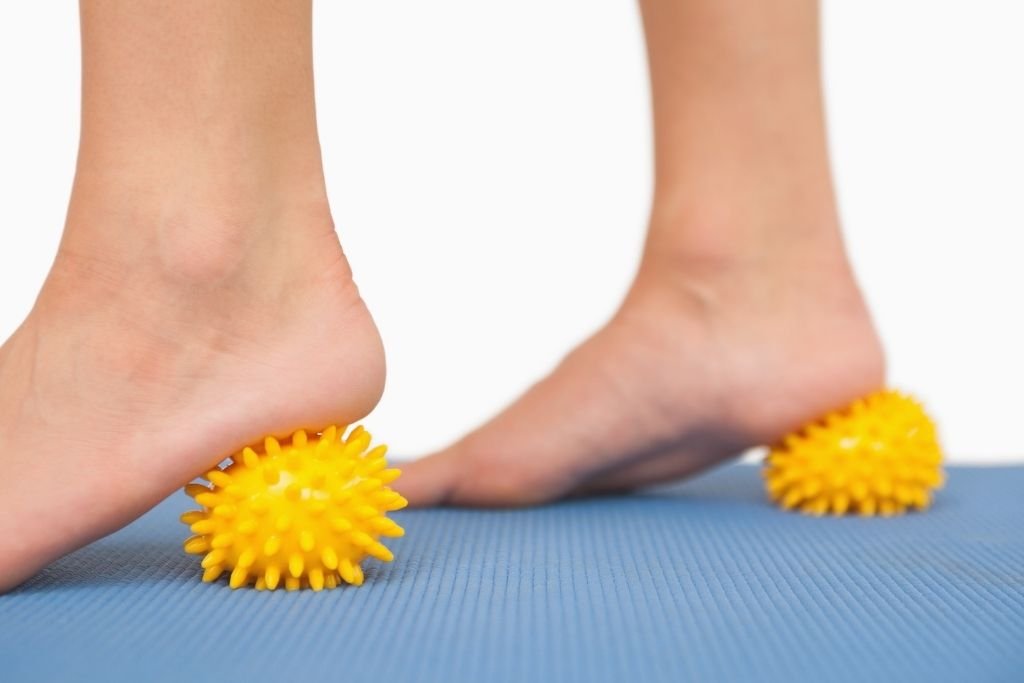
1. Slow, Sensory Foot Touch (Not Aggressive Rolling)
Firm, slow massage:
- Signals safety to the brain
- Lowers cortisol output
- Improves fascia hydration
Think calming pressure, not punishment.
2. Breathe While You Work Your Feet
Pair foot massage with:
- Slow nasal breathing
- Long exhales
This tells your nervous system:
“We are safe. We can soften.”
Pain often reduces before tissue changes — because the brain relaxes first.
3. Short, Consistent Rituals Beat Long Sessions
5 minutes daily > 45 minutes once a week.
Consistency trains:
- Hormonal rhythm
- Nervous system trust
- Fascia adaptability
This is especially important for busy women in caregiving or standing professions.
4. Reduce “Foot Stress Load” Where You Can
Support cortisol balance by:
- Rotating footwear
- Avoiding constant barefoot-on-hard-floors
- Taking micro-sitting breaks
Less stress input = better healing capacity.
The Bigger Reframe: Your Feet Are Stress Sensors
Your feet are not failing you.
They are communicating.
In menopause, foot pain often says:
“I need more safety, not more force.”
When we support cortisol balance, nervous system regulation, and fascia health together — pain becomes information, not a life sentence.
A Gentle Next Step
Tonight, before bed:
- Sit comfortably
- Place one hand on your foot
- Breathe slowly for 60 seconds
- Massage with curiosity, not urgency
Notice how your body responds — not just your feet.
That awareness is where healing begins. Check out this blog for a better foot healthy lifestyle!

Author: Keresha