Why Barefoot Time Is Your Feet’s Secret Superpower (Yes, Even Indoors!)
Let me guess.
You finally get home, kick off your shoes with a little sigh of relief, and think:
“Ahhh… freedom.”
But then almost immediately, the slippers go on. Or thick socks. Or sliders. Because somewhere along the line, we were taught that bare feet are a bit… risky. Cold floors. Hard tiles. “You’ll catch something.”
Here’s the truth (and this might surprise you):
your feet absolutely love barefoot time.
Not all day, not everywhere — but little, intentional moments can be one of the most powerful (and overlooked) ways to strengthen your feet, improve balance, and reconnect your body from the ground up.
Welcome to the barefoot advantage — Heal Ur Feet style.
Your Feet Aren’t Just There to Wear Shoes
Your feet are packed with thousands of sensory receptors. Think of them like tiny messengers constantly sending updates to your brain:
- “This surface is uneven”
- “Shift your weight”
- “Slow down”
- “You’re stable”
- “You’re not stable… help!”
When your feet are trapped in thick soles all day, that conversation gets quieter.
Barefoot time turns the volume back up — in a good way.
This foot–brain connection is key for:
- balance
- posture
- coordination
- confidence in movement
Especially as we get older, during peri- and menopause, or if we spend long hours sitting or standing.
Why Indoor Barefoot Time Matters So Much
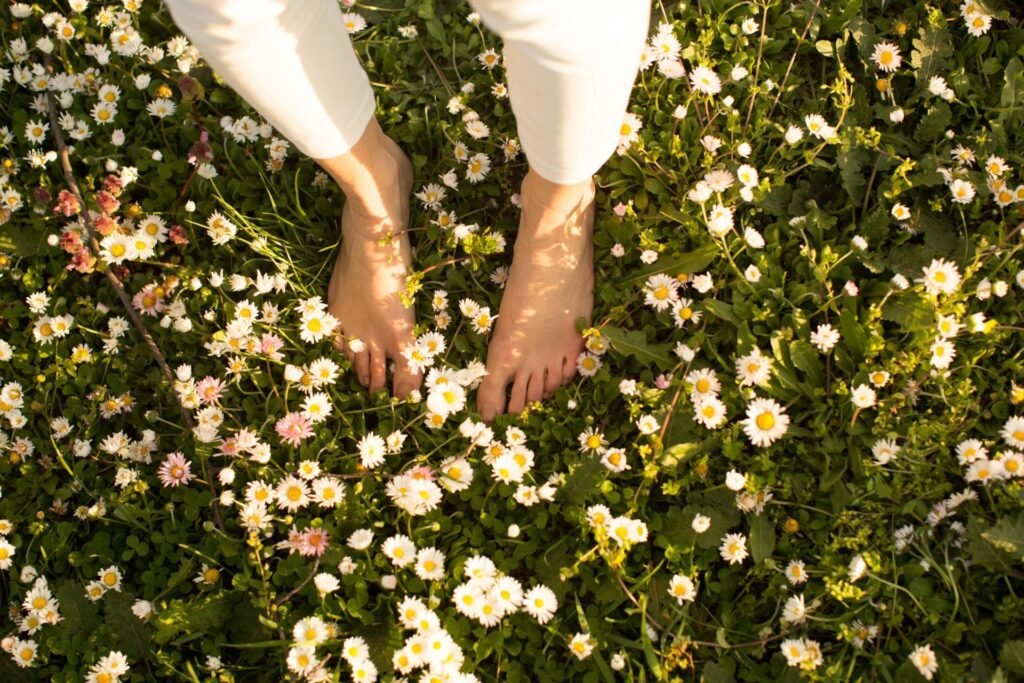
You don’t need to run barefoot through a meadow to get benefits (although… lovely if you can).
Indoor barefoot time is powerful because it’s:
- safe
- consistent
- easy to build into daily life
Standing barefoot on different textures gently challenges your feet and wakes up muscles and nerves that often fall asleep inside cushioned shoes.
And no — this isn’t about toughening up your feet or “pushing through discomfort.”
It’s about smart stimulation, not suffering.
What Actually Happens When You Go Barefoot (Briefly)
Here’s what your body gets when your feet meet the floor:
1. Your balance improves
Barefoot standing forces your feet and ankles to make tiny adjustments. That’s balance training without thinking about it.
2. Foot muscles switch back on
Shoes do a lot of work for our feet. Barefoot time lets your muscles do the job they were designed to do.
3. Your brain becomes more aware of your body
This awareness (called proprioception — don’t worry about the word) helps you feel more stable, grounded and confident when you move.
4. Movement starts to feel easier
When your foundation works better, everything above it benefits — knees, hips, posture.
“But I Can’t Walk Barefoot Everywhere…” (And You Don’t Need To)
Let’s be clear:
Barefoot time is a tool, not a lifestyle rule.
This is especially important if you:
- have diabetes
- have reduced sensation
- experience balance issues
- have very sensitive or fragile skin
For many people, the safest and smartest option is controlled barefoot stimulation — using textured surfaces rather than hard, flat floors alone.
This is where sensory tools (like textured mats or insoles) come in beautifully.
The Smart Way to Do Barefoot Time (Busy-Woman Edition)
You don’t need extra time. You just need better moments.
Try this:
Morning grounding
Stand barefoot for 1–2 minutes while brushing your teeth.
Kitchen therapy
Stand on a textured mat while making tea or cooking.
Desk reset
If you work from home, take your shoes off for short bursts and let your feet feel the floor.
Evening wind-down
Gentle barefoot standing or foot massage before bed helps calm the nervous system.
Consistency beats intensity every time.
Why Texture Makes Barefoot Time Even Better
Flat floors are fine — but textured surfaces give your feet more information.
Different textures:
- stimulate more nerve endings
- encourage better foot engagement
- keep barefoot time interesting (your brain loves novelty)
This is why I often recommend textured foot mats or insoles to clients — especially those who:
- want better balance
- feel “unstable” or disconnected
- have tired, achy feet
- want to strengthen feet without workouts
They turn everyday standing into quiet foot training.
A Gentle Note for Diabetic Feet
If you’re diabetic, barefoot time should always be intentional and safe:
- Inspect your feet daily
- Avoid rough or unpredictable surfaces
- Use clean, controlled environments
- Consider textured mats rather than bare floors
Your feet deserve stimulation and protection — both can coexist.
The Barefoot Truth
Barefoot time isn’t about being trendy.
It’s about remembering how your body was designed to work.
A few minutes a day can:
- strengthen your feet
- improve balance
- reduce stiffness
- help you feel more grounded and confident
Small daily steps. Lifelong results.
Your Next Strong Step
If you’re curious about adding safe, effective barefoot stimulation into your routine, this is where textured tools can be incredibly helpful — especially indoors, where we spend most of our time.
And if you’d like personalised guidance on foot strength, balance, or sensory stimulation (tailored to your lifestyle and needs), you know where to find me.
Your feet deserve luxury, not neglect.
Let’s help them remember just how powerful they are.

Author: Keresha

You May Also Like
5 Ways to Transition to a Foot-Healthy Lifestyle
Cortisol, Menopause & Foot Pain: The Hidden Stress Connection Women 40+ Need to Know